Katy Barrow-Grint Appointment
Gloucestershire's next Chief Constable: my view from the Police & Crime Panel
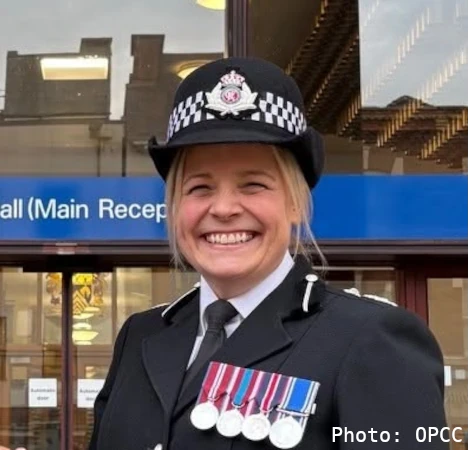
Yesterday's Police and Crime Panel confirmation hearing: DCC Katy Barrow-Grint is set to become Gloucestershire's next Chief Constable. The Panel informed her of our decision after the meeting.
Where the Panel fits in
A quick explainer for anyone wondering why the panel was only asking questions rather than choosing the candidate. The Police and Crime Commissioner recruits and selects the Chief Constable. Our Panel's job is scrutiny: we review the process, question the proposed appointee at a public confirmation hearing, and could veto the appointment with a two-thirds majority. Yesterday we gave it serious consideration, then confirmed her.
Only two candidates
After advertising there were only two candidates, and one withdrew. On the face of it that sounds a bit off, but the context matters. Nationally, chief constable shortlists have recently ranged from one to five candidates; West Midlands shortlisted three, Merseyside just one. The PCC considered and rejected re-advertising, judging it unlikely to produce a stronger field while risking further leadership delay.
That said, the lack of applicants deserves a question of its own: why are chief constable jobs attracting so few applicants? The inspection findings below, and the history, I'm sure, are part of the answer.
Why I think she is a good choice
I think Katy is a pretty good choice. She is fairly new to the force, yet as the deputy focused on the operational side she knows it inside out. The Panel's questions and deliberations convinced me she was the right person for the rapid turnaround the inspection demands. It helps that she is the national policing lead for investigations, given that investigating crime is one of the areas the force must fix. That is an opportunity, not a criticism: the problems predate her arrival.
She also inherits a force that has had two years of leadership limbo. Her predecessor was suspended in October 2024 and retired this July, and the Temporary Chief Constable chose not to apply and retires at the end of December. Stability matters as much as anything else right now.
To be balanced, the workforce session that fed into the process was not universally glowing: some participants felt wellbeing, morale, recruitment and retention were not adequately addressed, and wanted to see more courage to challenge. The external stakeholder panel was warmer, finding her impressive, genuine and victim-centred. I take that mix as an honest reflection.
The scale of the turnaround
And a turnaround is exactly what is needed. The latest PEEL inspection: two Inadequate grades, leadership and force management and investigating crime, both with six-month deadlines attached to formal recommendations. Four more areas rated Requires Improvement, and just one Adequate. Nothing Good. Nothing Outstanding. The panel had questioned all these areas, at length, in the previous meeting.
Behind the leadership grade sit two stark numbers: 17.1% of the workforce think change is managed well, and under 35% think senior leaders model expected standards. Those figures show exactly what happens when public services are hollowed out year after year. A police force that cannot invest in its people, its systems or its communities cannot keep people safe. It is a damning indictment of Westminster governance.
My question to the candidate
As always, I try and push the boundaries. Pre-prepared question 9 got a polished answer, so I asked my own follow-up.
I told her that as a district councillor I meet residents who do not trust the police and want nothing to do with them. These people are the grassroots of our communities. The Home Secretary recently told police that impartiality means keeping at arm's length from grassroots campaigners and organisations, which strikes me as government steering the police away from sections of the public. Peel, who has been mentioned a few times in the meeting, said the opposite: the police are the public, and the public are the police. So would she resist that steer, engage with grassroots groups in Gloucestershire including the ones critical of policing, and how would she win back the trust of the people who currently feel the police are not for them?
The Chair swiftly interjected that she did not have to answer, as the question was outside the Panel's terms of reference. The Panel's terms of reference are narrower than the problems Gloucestershire faces. To be fair, she did have a stab at answering it. I respect that! 😉
Holding ourselves to account
The causes of concern raised in the PEEL inspection carry a six-month deadline. Whether that is deliverable is another matter: when the Panel pressed on timescales at the previous meeting, the more realistic answer to emerge was that a genuine turnaround will take closer to 18 months. Watch this space.
I intend to come back to this at six month intervals and check the recommendations against what has actually been delivered. I'll keep asking regardless of whether it is on the agenda.
Unusually, unlike the main Panel meeting, the GCC webcast video of the interview process has not become available. I'll post the clip as and when it does.